Twelfth century
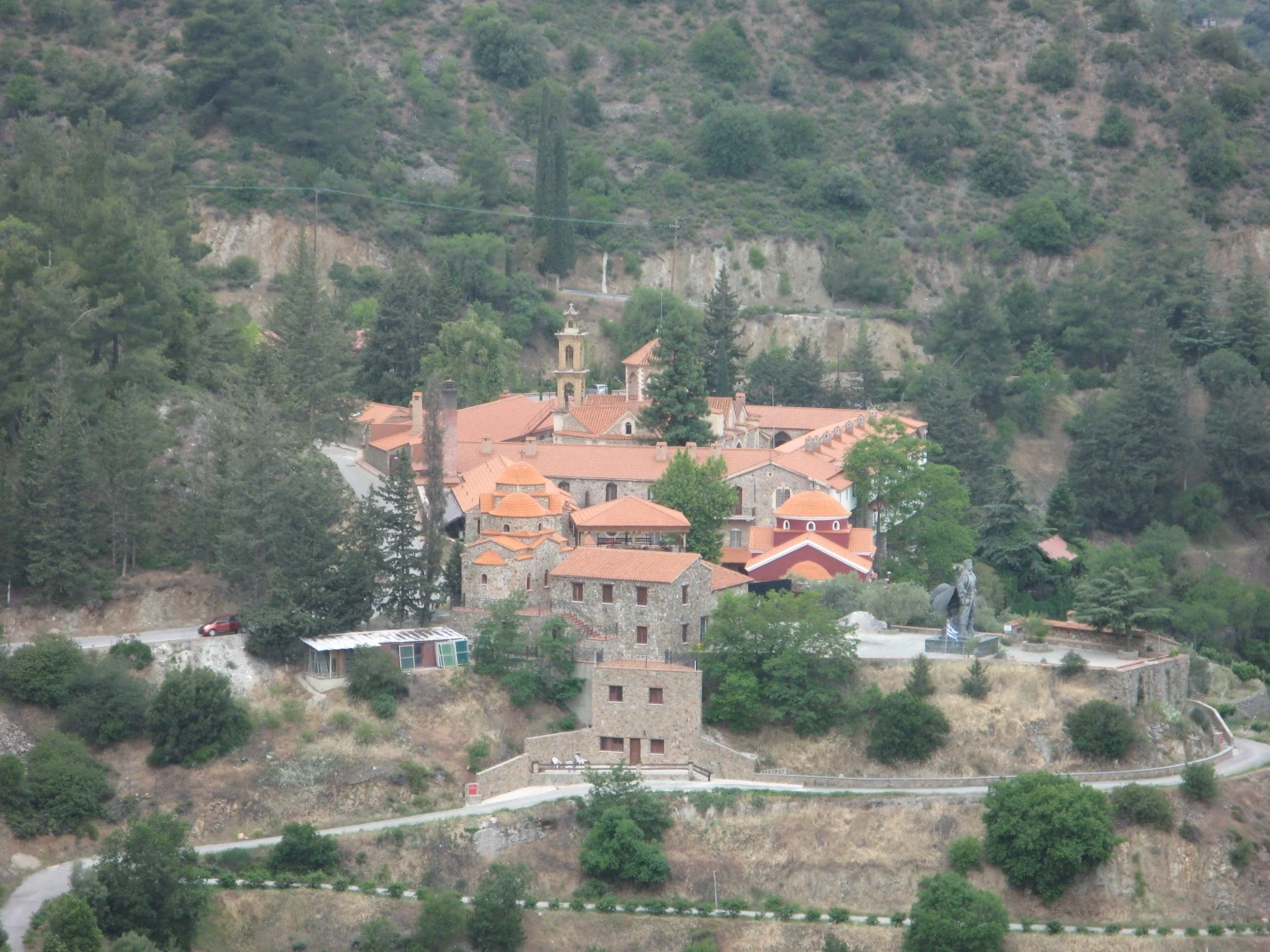
The monastery stands in the mountains at an altitude of about 870 metres. We remember especially the narrow, winding road: a drop on one side, a sheer rock face on the other, and in places barely enough room for two cars to pass.
The foundation of the monastery is associated with the hermits Neophytos and Ignatios, who found an icon of the Virgin. Under Emperor Manuel Komnenos, the monastery received patronage from Constantinople and came to be called “Royal”.
The icon of Panagia Machairiotissa stands to the right of the Royal Doors. When we arrived, a very elderly monk learned that we were from Russia, took out a silver knife in a sheath and traced a cross with it first on his own forehead and then on ours. The Greek word “machaira” means “knife”, so we remember this episode especially well.
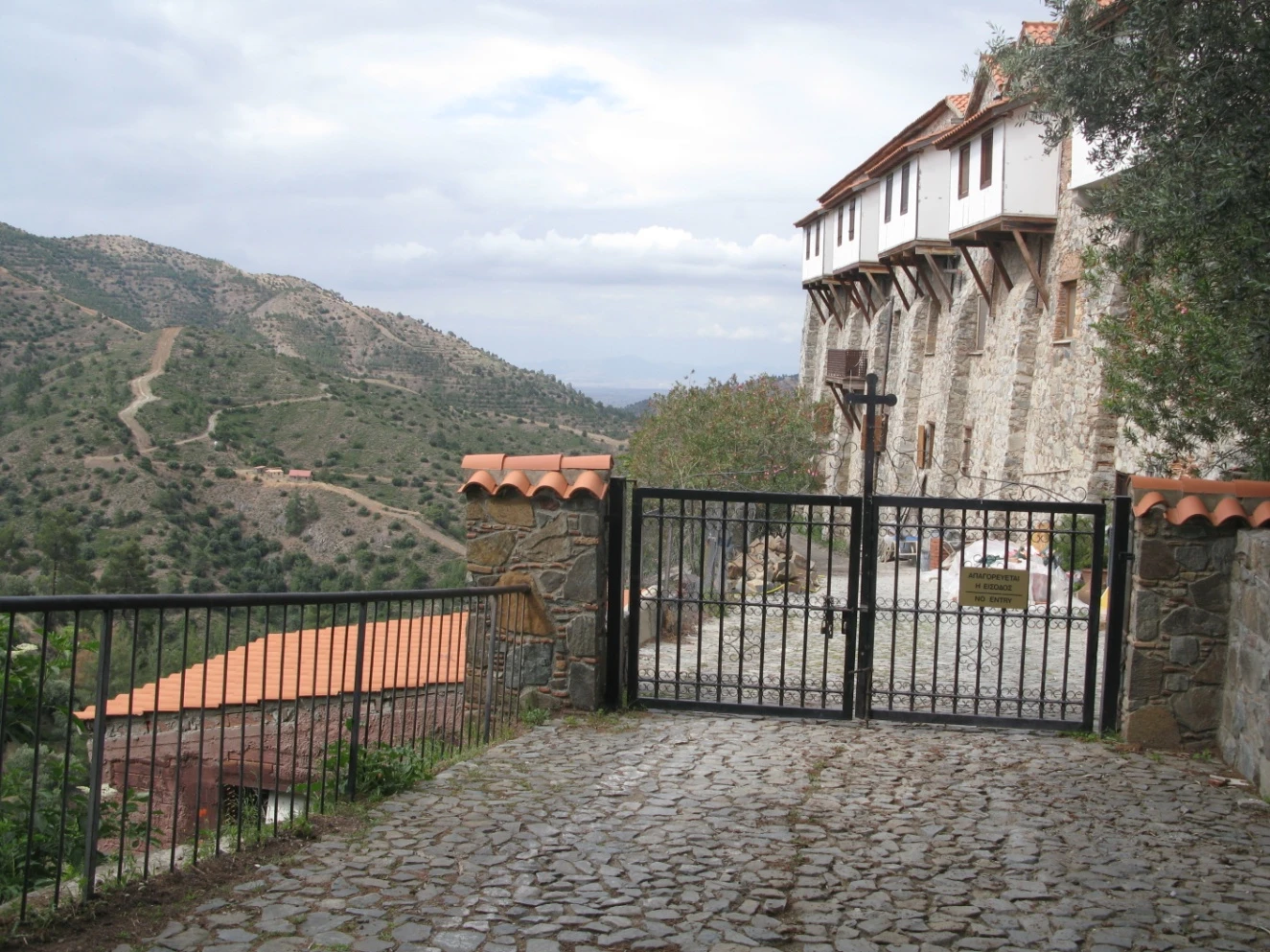
We retain the personal story of the old monk and the silver knife because it helps explain the origin of the name. At the site it is also important to observe the mountain landscape, the inner courtyard and the galleries of cells.
Images