Twelfth century BCE
Palaepaphos was founded a few kilometres from the sea; the modern village of Kouklia stands nearby. According to tradition, the city was founded either by Kinyras, a priest of Aphrodite, or by Agapenor, an ancient Greek king who took part in the Trojan War.
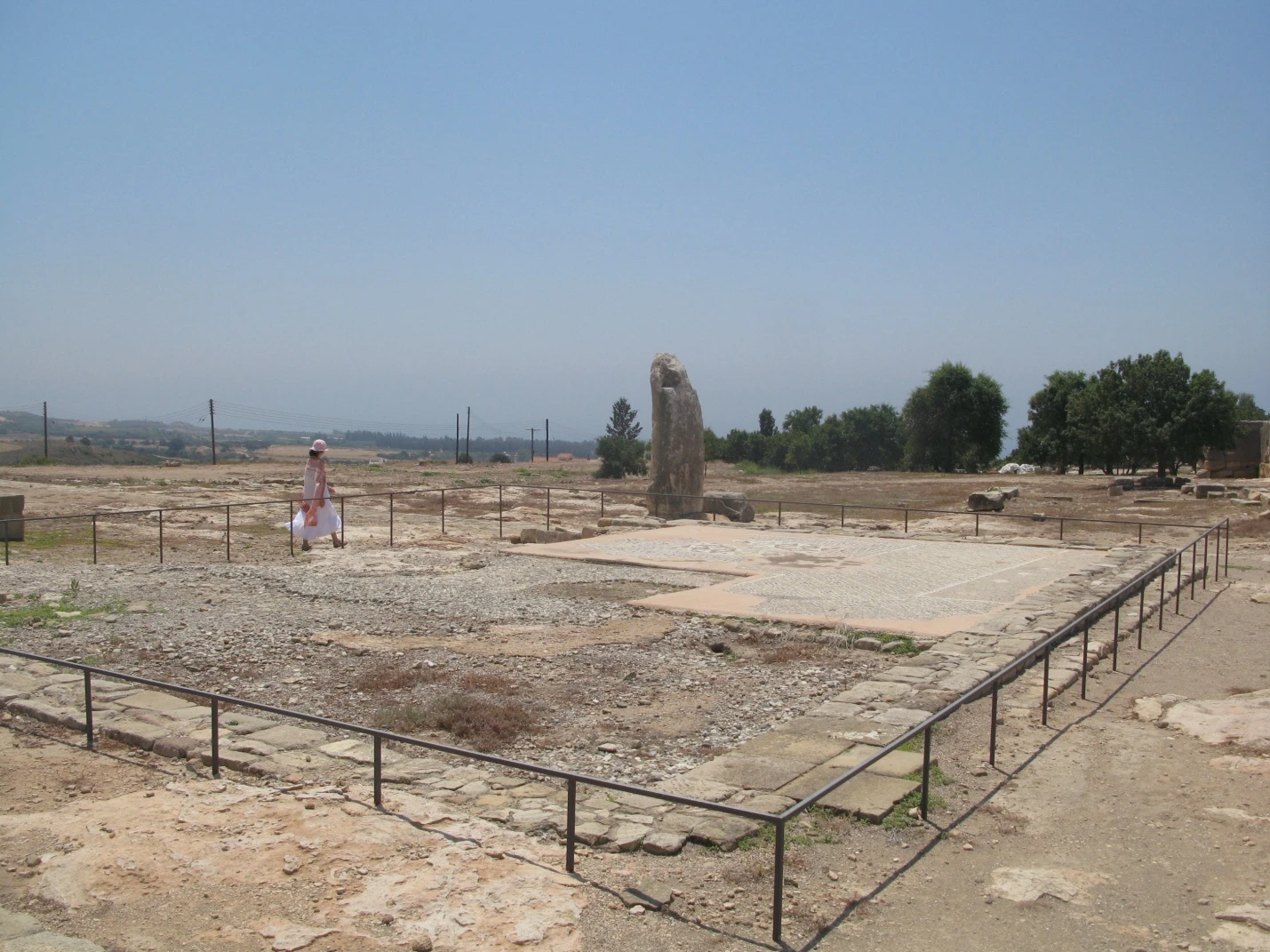
The remains of the ancient Sanctuary of Aphrodite survive within the museum and excavation area. The museum displays a dark conical stone that was worshipped in place of an anthropomorphic statue of the goddess. It is associated with fertility and helps trace the transition from earlier eastern Mediterranean cults to the worship of Aphrodite.
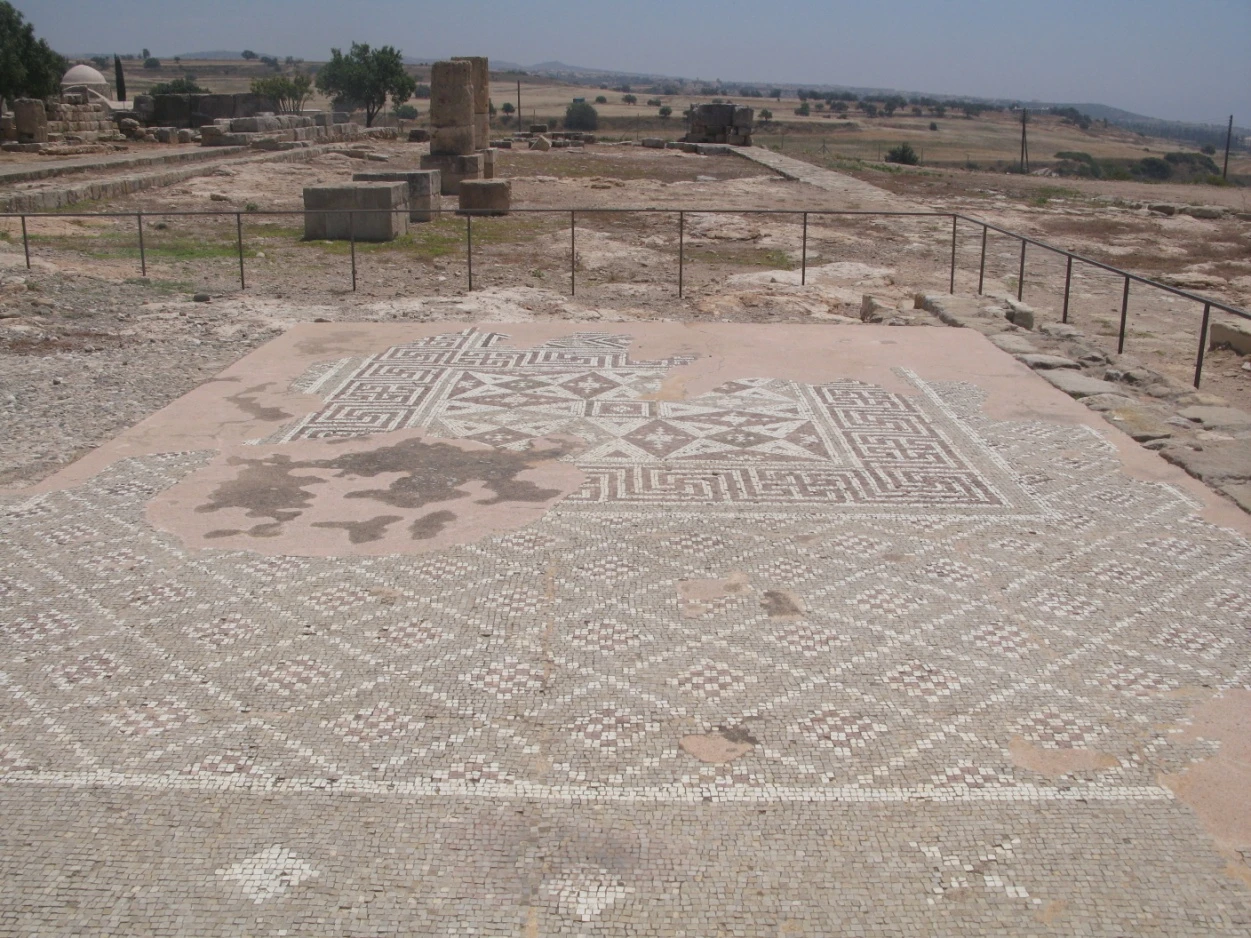
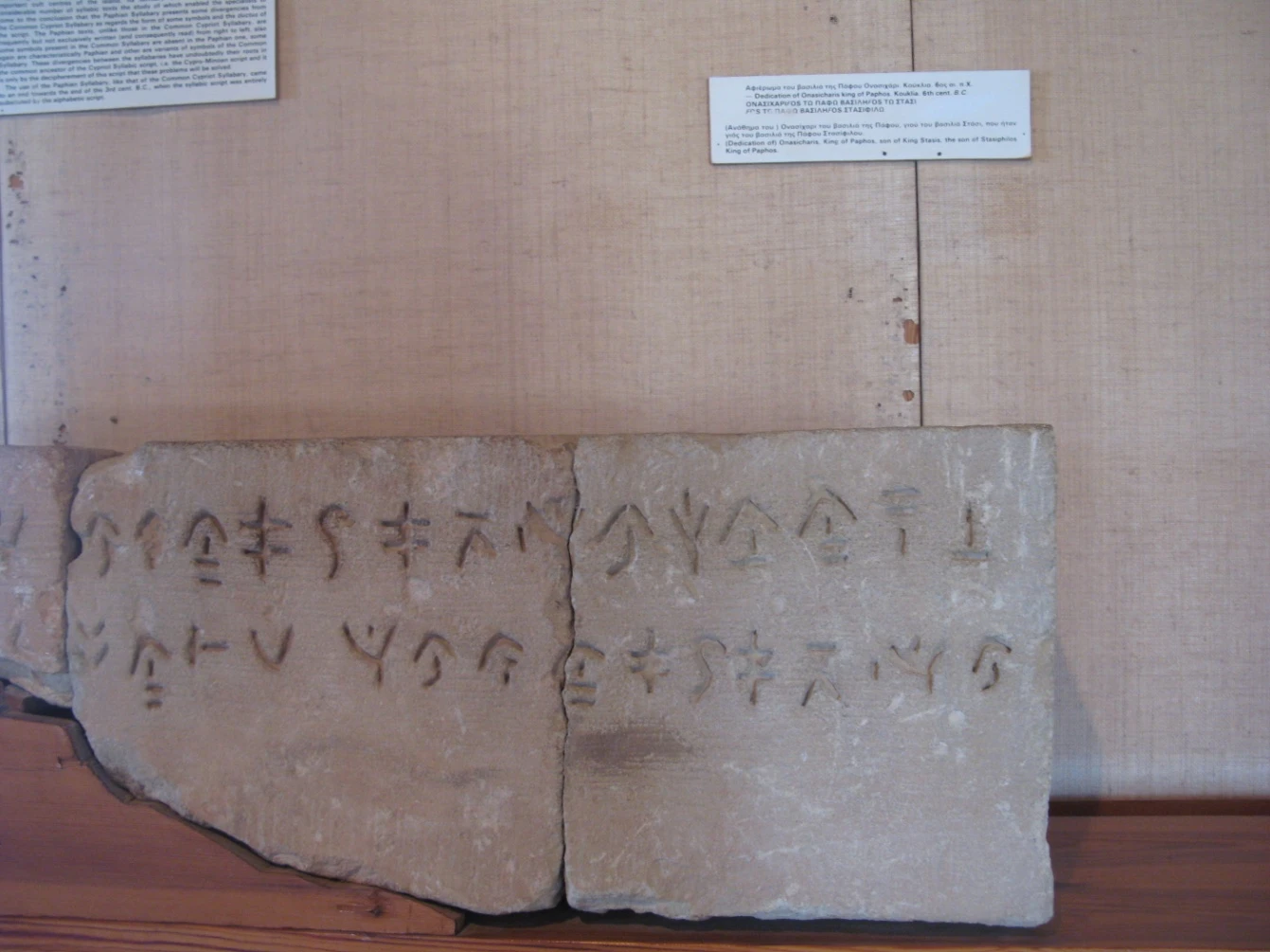
We also saw mosaic floors and a sixth-century BCE inscription written in the Cypriot syllabary. Its translation names Onasicharis, king of Paphos, and lists his royal ancestors.
Images